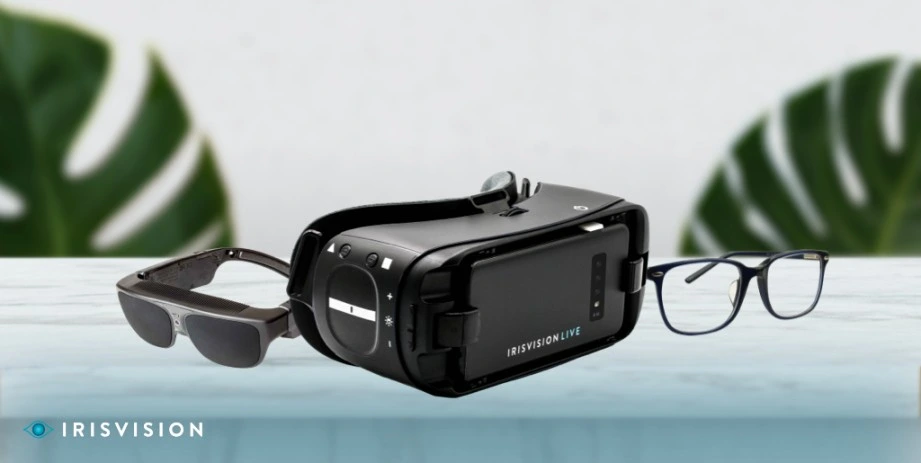
IrisVision Vista is wearable electronic Low Vision Glasses for remaining RP vision — see Vista · buy · compare smart glasses.
What is Retinitis Pigmentosa?
Retinitis Pigmentosa refers to a group of diseases that involve the breakdown and loss of cells in the retina.
The deterioration of the photoreceptor cells leads to a gradual loss of sight. The photoreceptor cells found in the retinal tissue are responsible for converting light into electrical impulses readable by the brain.
What Causes Retinitis Pigmentosa?
Retinitis pigmentosa is a genetic disorder, which is caused by a genetic mutation of any of the 50 different genes.
So chances of contracting the genetic disorder mainly depends upon whether your parents had it before you. Though the disorder may be rare but can result in peripheral or complete vision loss and affects about 1 in every 4,000 people in the US as reported by the National Institute of Health.
What Are The Early Symptoms of RP?
The progressive symptoms of RP vary for each patient, depending on which gene mutation has caused their condition. But symptoms of RP typically appear early on in childhood which is why some people experience rapid vision loss in early adulthood, while others may be able to retain part of their vision until late 50’s.
The effects on children can result in difficulty to see around in the dark, and it may take them a longer time to adjust to changes in lighting.
Most patients also experience photophobia; a discomfort resulting from brightly lit places.
What Does RP Look Like?
Most people with RP undergo common vision problems such as the following:
- Night Blindness
The loss of rod cells in the retina makes it difficult for a person to see in the dark, as well as when a person changes place from a dimly lit to a well lit environment.
- Tunnel vision
Tunnel vision affects the visual acuity in the peripheral vision and to put it in more simpler words, it narrows down a person’s field of vision due to the damaged rod cells in the outer layer of the retina.
Treatments of Retinitis Pigmentosa
In spite of the medical advancements, unfortunately, there is no cure for Retinitis Pigmentosa. However, there are treatments that can slow down the progress of the diseasea nd make it manageable. Some of the conventional treatments include:
- Night Blindness
The loss of rod cells in the retina makes it difficult for a person to see in the dark, as well as when a person changes place from a dimly lit to a well-lit environment.
- Tunnel vision
As the rod cells in the outer layer of the retina get damaged, the patient also gradually loses the ability to see in their periphery.
- Vitamin A palmitate
In some cases, Vitamin A palmitate treatment may slow down the effects that prevent vision from further deterioration. This procedure involves taking small, periodic doses of Vitamin A palmitate if advised by an ophthalmologist or an eye specialist.
More so the intake amounts of Vitamin A palmitate must also be carefully monitored as it can be harmful if taken in large amounts.
- Retinal Implant
A surgical procedure recommended in the later stage of RP, as it helps bring back some vision. The process requires an electrical implant to fit into the retina of the eye.
The Argus II is an implant that is paired with glasses that restores a patient’s ability to identify objects around them. Most people with a retinal implant have a vision improvement to the extent that they can locate lights and windows in a room, and sometimes people as well.
Is there a low vision device that provides a solution for RP patients?
Yes, most certainly!!!
IrisVision Vista glasses for Retinitis Pigmentosa are a breakthrough technology for RP patients, designed in collaboration with leading institutes like Johns Hopkins University, Stanford University, and UPMC Pittsburgh, and is the only device funded by a research grant from the National Eye Institute.
Vista is a wearable, hands-free low-vision headset that you control by voice or a simple remote, enhancing what remains of your sight so you can make the most of it.
Vista comes with customizable features that you can adjust based on your unique visual requirements and your ease of use.
It consists of award-winning software lenses specifically designed for people with eye conditions such as RP, Glaucoma etc.
- RP Mode
The special ‘RP mode’ is made specifically to suit the visual needs of a person with retinitis pigmentosa. It shrinks any image to a much smaller size and fits to your field of view.
- Colored Reading Mode
Iris, Vista’s voice-first assistant, reads printed text aloud on command (OCR read-aloud). The text is also displayed in a relatively large, high-contrast font so users can follow along as they listen.
-
Scene Mode
Vista’s ‘Scene mode’ counters your tunnel vision by providing an industry-leading, 70-degree wide field-of-view. Its auto-focus magnification shrinks the entire scene to a smaller size and is ideal for seeing both near and far objects.
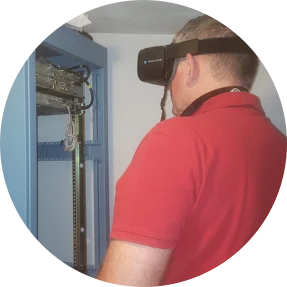
“It was not what I had expected - nothing is like the IrisVision. IrisVision is incredible!
Just a few days ago I replaced three electrical outlets without any problems. IrisVision is wha’s keeping me employed!”
-Ed Combis, A former Special Weapons Technician with Retinitis Pigmentosa
Thousands of low-vision and vision-impaired individuals across the global have experienced the change.
Are you ready?
https://youtu.be/y-2A7lF\_Fec IrisVision Vista
Retinitis Pigmentosa FAQs
What is the best treatment for retinitis pigmentosa?
As indicated that RP cannot be completely cured, some studies have found that a daily intake of Vitamin A palmitate(15000 IU) decreased the progression of RP in some patients. TheArgus retinal prosthesis is a surgical treatment which involves an electronic sub-retinal implant in place of the damaged retina of the patients.
Gene therapy is also a potential treatment being considered for replacing the mutated retinal gene with a healthy gene variant to resume the healthy functioning of photoreceptor cells in the patient of RP but this treatment is still underway.
Can you prevent retinitis pigmentosa?
RP is a chronic condition that cannot be prevented or reversed, however, its progress can be slowed down from further progression by taking preventive measures for management. Helpful low-vision aid devices designed under the careful collaborative work of medical professionals and tech-experts such as IrisVision compensate for the visual defects of the person and are programmed so as to cater for individual visual requirements.
How does retinitis pigmentosa affect daily life?
Individuals with low vision caused by RP experience increased difficulty to see at night, termed loss of night vision. It may progress to a loss of peripheral vision, central vision and color vision as well.
What vitamins are good for retinitis pigmentosa?
Vitamins most essential for this cause include Vitamin-A, Vitamin-C, E. Milk, eggs (yolks in particular), cheese, and yogurt are a good source of vitamins
How does a person with retinitis pigmentosa see?
Having retinitis pigmentosa is an individual experience. It may differ for everyone. For some people, the onset of symptoms may start at an earlier age while in some cases the disease may progress at a very slow rate. Really, there is no rule of thumb for dealing with retinitis pigmentosa.
Who is most likely to get retinitis pigmentosa?
Retinitis Pigmentosa is a genetic disorder passed down from parents to their offspring. If either of the parents has a dominant gene for this disease, they have a 1 in 2 chance of passing it down to their child, whereas if both parent individuals carry the recessive gene for RP, they have a 1 in 4 chance of passing it down to their offspring.
What does retinitis pigmentosa cause?
Retinitis Pigmentosa affects the vision in three main ways:
- Causes night blindness.
- Causes tunnel vision
- Vague color differentiation and acuity
Does everyone with retinitis pigmentosa go blind?
No, RP rarely causes complete blindness, rather most of the people suffering from it retain some part of their central vision even after the progressive deterioration of the disease over a longer time span.